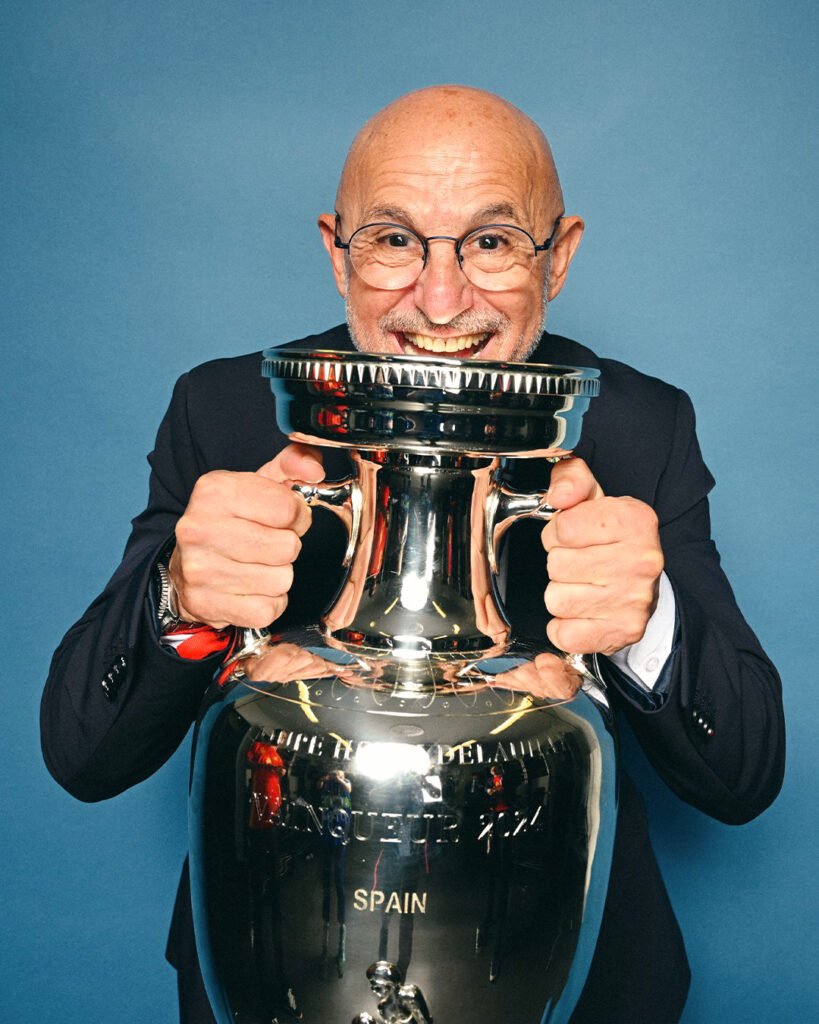

When Luis de la Fuente was appointed head coach of Spain’s senior national team in December 2022, the wider footballing world reacted with a collective shrug. He wasn’t a glamorous marquee name, nor did he possess a glittering resume of Champions League titles. Instead, he was the ultimate federation insider—a man who spent years working in the relative anonymity of youth development.
Fast forward to today, and that quiet, patient approach has yielded one of the most complete managerial trophy hauls in modern international history, culminating in a historic 2026 FIFA World Cup triumph. His story isn’t one of overnight tactical genius; it is a masterclass in trusting the process, nurturing relationships, and building a footballing dynasty from the ground up.
De la Fuente’s journey through the Spanish Football Federation (RFEF) pathway reads like a slow-burning epic. He took over the Under-19 team on a provisional basis in 2013, dealing with low expectations and high pressure. Rather than treating the youth ranks as a stepping stone, he treated them as a laboratory.
His journey through the Spanish Football Federation pathway was a masterclass in patience. His first major breakthrough came back in 2015, when he guided a hungry Under-19 squad to a European Championship title under the summer sun in Greece. That wasn’t a flash in the pan. Moving up to the Under-21 side a few years later, he proved his system was scalable, repeating the feat in 2019 by capturing yet another European crown. By the time he took the Olympic squad to Tokyo in 2021 and captured a prestigious silver medal, the blueprint was fully formed.
During this decade-long crawl through the age groups, de la Fuente wasn’t just winning matches; he was forging bonds. Players like Mikel Merino, Dani Olmo, Mikel Oyarzabal, and Fabián Ruiz learned his principles of sacrifice, humility, and tactical fluidity long before they ever put on a senior shirt.
When Luis Enrique stepped down after a disappointing 2022 World Cup campaign, the federation knew exactly where to look. They didn’t need a heavy-handed tactician to reinvent the wheel; they needed someone to breathe life back into the squad.
De la Fuente blended Spain’s iconic, suffocating possession game with a terrifying, modern directness. The results were immediate and devastating. He brought home the 2023 UEFA Nations League, before staging a flawless, seven-win masterclass to lift the Euro 2024 trophy.
But the pinnacle came under the bright lights of North America. Spain marched through the 2026 FIFA World Cup with a signature mix of defensive steel and fearless attacking flair spearheaded by the likes of Lamine Yamal and Pedri. When Spain edged Argentina 1–0 after extra time in the final, it didn’t just seal their second world title—it cemented de la Fuente’s legacy as the oldest manager to ever win the World Cup, doing so at 65 years and 28 days old.
From coaching teenagers on muddy training pitches to lifting the most iconic trophy in sports, Luis de la Fuente proved that patience, loyalty, and belief in youth can still conquer the footballing universe.